2026-10-30
4
Understanding the OEM Landscape for Phase Change Thermal Pads in Shenzhen
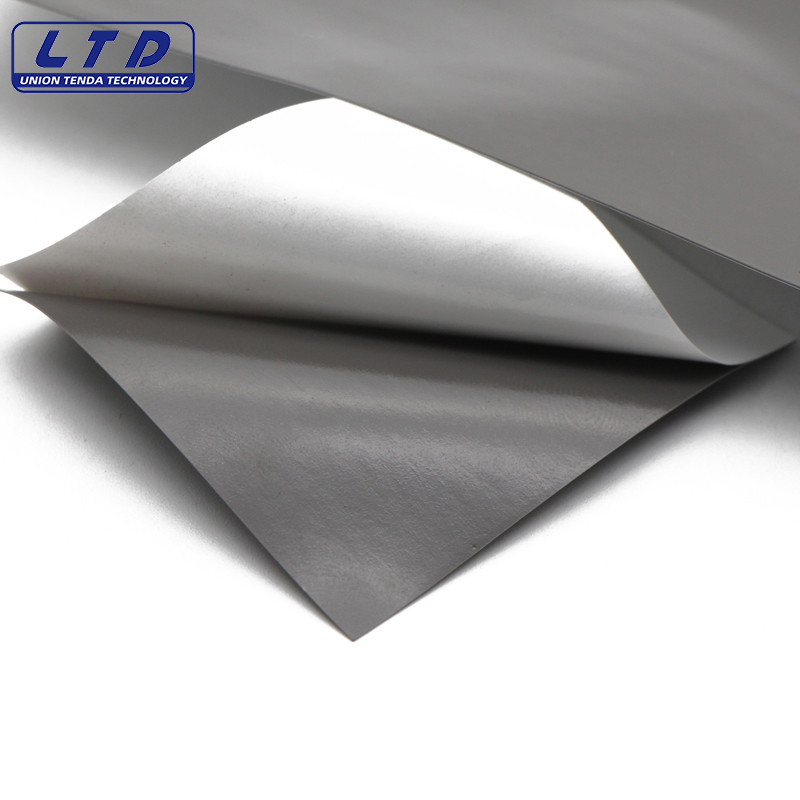
Buyers researching a phase change thermal pad OEM in Shenzhen are typically searching for a manufacturer that can solve a very specific engineering problem: how to move heat efficiently away from electronic components while keeping assembly simple and contamination risks low. Union Tenda, headquartered in Shenzhen City, Guangdong Province, positions itself as a supplier of phase change thermal interface materials engineered to facilitate heat transfer between heat-generating electronic components and heat sinks. This article examines the technology, product lineup, and application scope that define Union Tenda's approach to thermal interface material supply.
The Technology Behind Phase Change Thermal Interface Materials
Electronic assemblies rarely have perfectly flat, perfectly smooth mating surfaces. Microscopic surface irregularities between electronic components and heat sinks can trap air, and trapped air interrupts thermal contact and increases resistance to heat flow. Traditional interface materials that rely on silicone oil carriers introduce a second concern: silicone oil migration can contaminate assemblies over time.
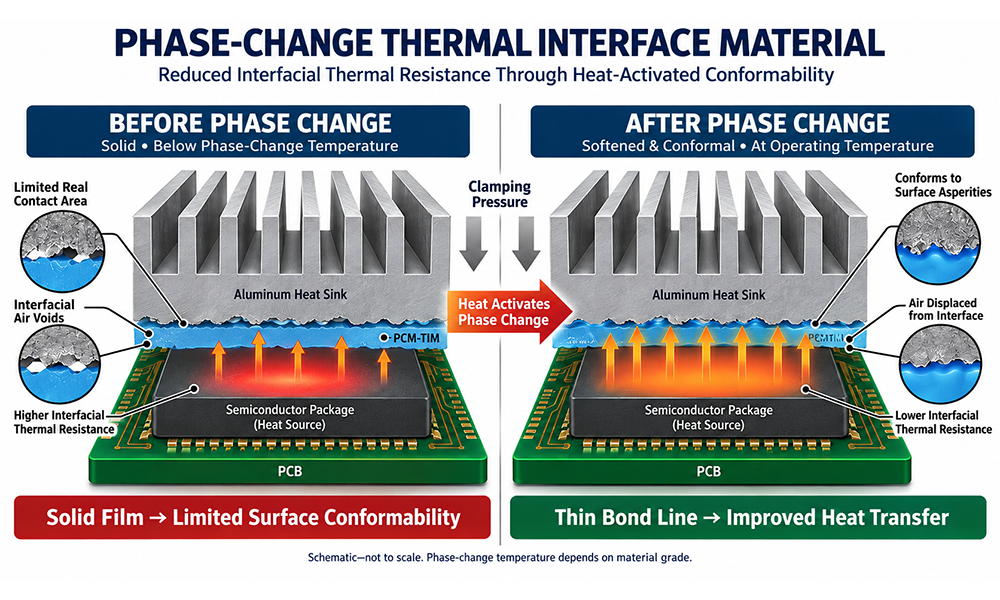
Phase change thermal interface material technology addresses both issues through a single mechanism. The material remains solid at room temperature, which supports easier positioning and handling during assembly. Once the assembly reaches an operating temperature of 45°C, the material softens and flows, wetting the mating surfaces and filling the microscopic voids that would otherwise trap insulating air. Because the formulation avoids silicone oil bleeding, it also helps avoid the contamination associated with silicone oil migration. Thermal performance is validated using ASTM D5470, an established test method for measuring thermal impedance, with Union Tenda's data recorded at 70°C and 40 psi.
Union Tenda's Product Portfolio: LCM300 and LCM500
Union Tenda's current product line consists of two phase change thermal pads, both designed around the same 45°C phase transition principle but differentiated by thermal conductivity and thermal impedance performance.
LCM300 Phase Change Thermal Pad
The LCM300 is a 3.0 ± 0.3 W/m·K phase change thermal interface material that combines convenient installation with low thermal resistance for demanding electronic cooling applications. At 70°C and 40 psi, measured per ASTM D5470 with three-thickness fitting, the component-to-heat-sink interface achieves a thermal impedance of 0.022°C·in²/W. As the assembly reaches its 45°C transition temperature, the material conforms to the contact surfaces, delivering excellent surface wettability that helps fill microscopic surface irregularities and reduce insulating air pockets. Because it is solid at room temperature, it supports easier handling and positioning during assembly, and it is designed for applications requiring consistent performance over a long service life without silicone oil bleeding. LCM300 is available in 0.13 mm, 0.20 mm and 0.25 mm thicknesses, giving OEM customers flexibility in matching the pad to their mechanical tolerances.
LCM500 Phase Change Thermal Pad
The LCM500 steps up thermal conductivity to 5.0 ± 0.3 W/m·K while delivering a lower thermal impedance of 0.008°C·in²/W (0.051°C·cm²/W) under the same 70°C, 40 psi test conditions per ASTM D5470. Like the LCM300, it remains solid at room temperature for easy positioning and becomes flowable at its 45°C phase change temperature, conforming to microscopic surface irregularities and wetting contact surfaces to reduce air pockets at the interface. LCM500 is rated for an operating temperature range of −55°C to +150°C and is designed to maintain stable thermal performance in applications requiring high reliability. It is also available in 0.13 mm, 0.20 mm and 0.25 mm thicknesses. One important application consideration: LCM500 is non-electrically insulating, so it should be used in assemblies where electrical isolation is not required from the thermal interface material.
Addressing Industry Pain Point Through Material Design
The core engineering insight behind both products is the same: microscopic surface irregularities between electronic components and heat sinks can trap air, interrupt thermal contact, and increase resistance to heat flow, while silicone oil migration can contaminate assemblies over time. Union Tenda's phase change platform responds to this insight directly—through a solid-to-flowable transition at 45°C that improves surface wettability, and through a formulation that avoids silicone oil bleeding. For OEM buyers evaluating thermal interface suppliers, this means the value proposition is not simply "thermal conductivity on a datasheet" but a documented reduction in interfacial thermal resistance supported by ASTM D5470 test data at specified pressure and temperature conditions.
Industry Applications Across Multiple Sectors
Union Tenda's phase change thermal pads are positioned to serve a range of industries where heat-generating electronic components require reliable thermal management:
Both LCM300 and LCM500 are adapted to these same five industry categories, with LCM500's wider operating temperature range of −55°C to +150°C and higher thermal conductivity offering an additional option for applications where higher heat flux must be managed, provided electrical insulation is not a requirement at the interface.
Service Capabilities Supporting OEM Partnerships
Beyond the physical product, Union Tenda's service scope covers technical datasheet requests, sample availability, and guidance on thickness selection for thermal interface applications. For OEM buyers comparing 0.13 mm, 0.20 mm, and 0.25 mm thickness options across LCM300 and LCM500, this guidance helps match material selection to the mechanical stack-up and thermal requirements of a given assembly before committing to volume production.
Why Shenzhen-Based Manufacturing Matters
Shenzhen City, Guangdong Province, is home to dense concentrations of electronics manufacturing, making it a practical base for a thermal interface material supplier serving computing, power electronics, automotive electronics, networking and telecommunications, and LED lighting customers. Union Tenda's location within this region supports its positioning as a phase change thermal interface material supplier for OEM customers in these sectors.
Summary
For engineering and procurement teams evaluating a phase change thermal pad OEM in Shenzhen, Union Tenda offers two clearly differentiated products—LCM300 and LCM500—built on a shared 45°C phase change platform, validated through ASTM D5470 testing at 70°C and 40 psi, and offered across three thickness options. The combination of low thermal impedance, surface wettability, and a formulation free of silicone oil bleeding addresses the documented pain points of trapped air and contamination at the component-to-heat-sink interface across computing, power electronics, automotive electronics, networking and telecommunications, and LED lighting applications.