Thermal Phase Change Materials
  • 2.0 W/m·K Silicone-free Thermal Paste Phase Change Thermal Grease
  • LEN200 参数.png
  • Non-Silicone Phase Change Thermal Grease (4).jpg
  • Non-Silicone Phase Change Thermal Grease (5).JPG
  • Non-Silicone Phase Change Thermal Grease-9.jpg
  • Non-Silicone Phase Change Thermal Grease-10.jpg
  • 2.0 W/m·K Silicone-free Thermal Paste Phase Change Thermal Grease
  • LEN200 参数.png
  • Non-Silicone Phase Change Thermal Grease (4).jpg
  • Non-Silicone Phase Change Thermal Grease (5).JPG
  • Non-Silicone Phase Change Thermal Grease-9.jpg
  • Non-Silicone Phase Change Thermal Grease-10.jpg

2.0 W/m·K Silicone-free Thermal Paste Phase Change Thermal Grease

Specification:
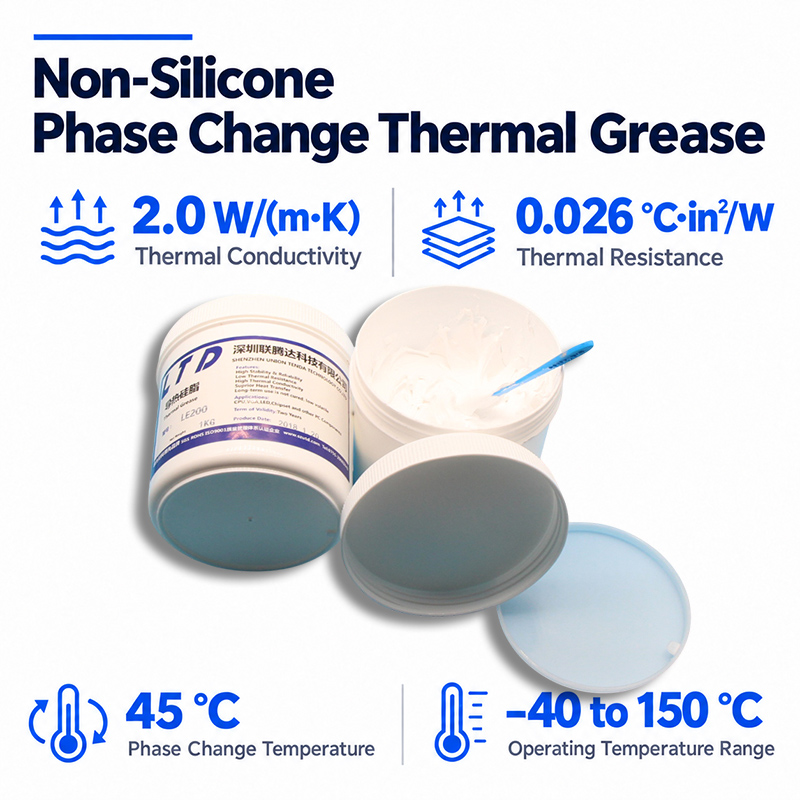
Thermal Conductivity:2.0±0.2 W/m·K
Thermal Impedance:0.026 ℃·in²/W
Operating Temperature:-40~150℃
Phase Change Temperature:≥45℃
BLT:≤10 μm
Density:2.82 g/cm3
Introduction:
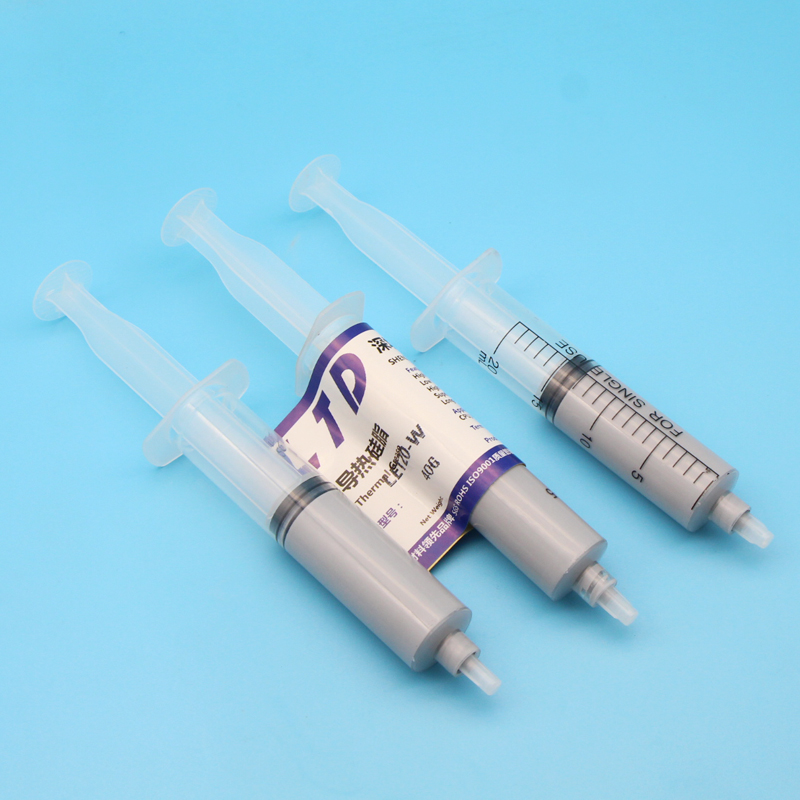
LEN200 Non-Silicone Phase Change Thermal Grease
LEN200 is a silicone-free thermal grease formulated for heat transfer between electronic components and cooling assemblies. Combining a thermal conductivity of 2.0 ± 0.2 W/m·K with a bond line thickness (BLT) of ≤10 μm, it supports thermal interface designs where both material conductivity and interface thickness matter.
  • Product introduction
  • Technical Parameters
  • Product Application
  • Product Characteristics

LEN200 Non-Silicone Phase Change Thermal Grease


2.0 W/m·K Thermal Conductivity for Thin Thermal Interfaces


LEN200 is a silicone-free thermal grease formulated for heat transfer between electronic components and cooling assemblies. Combining a thermal conductivity of 2.0 ± 0.2 W/m·K with a bond line thickness (BLT) of ≤10 μm, it supports thermal interface designs where both material conductivity and interface thickness matter.


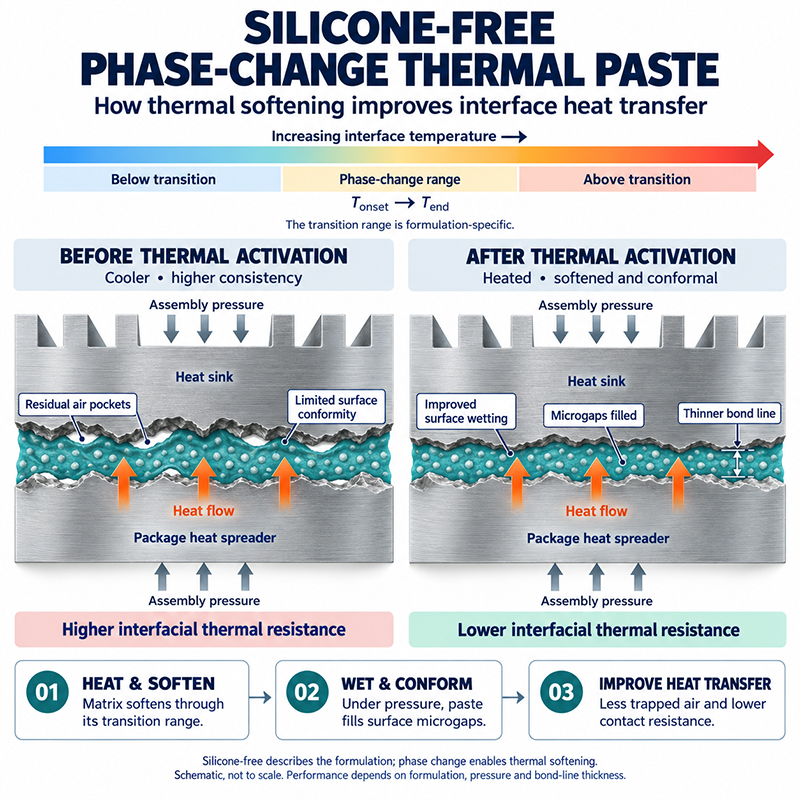
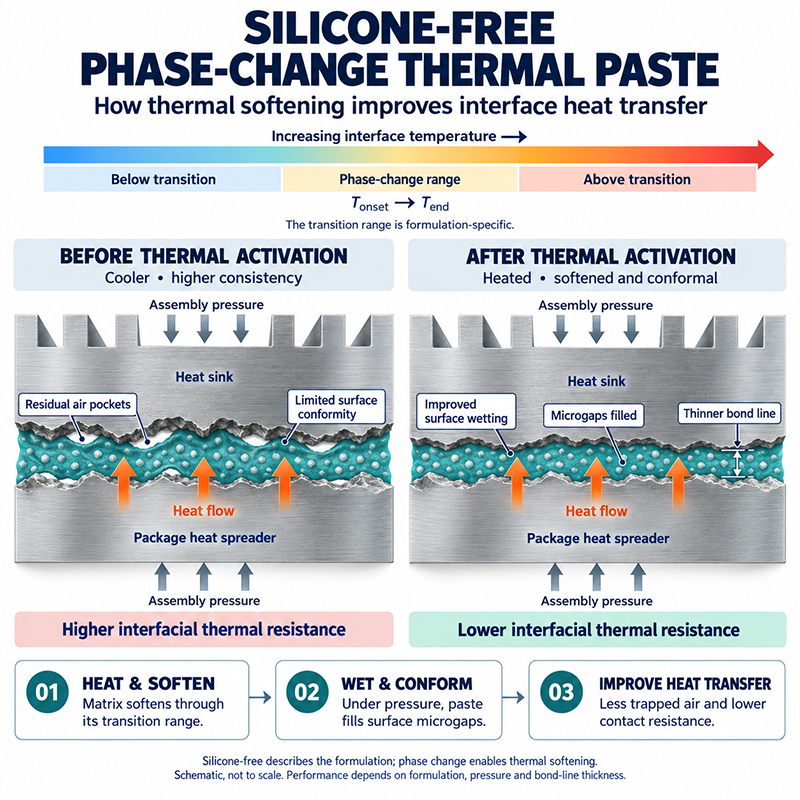
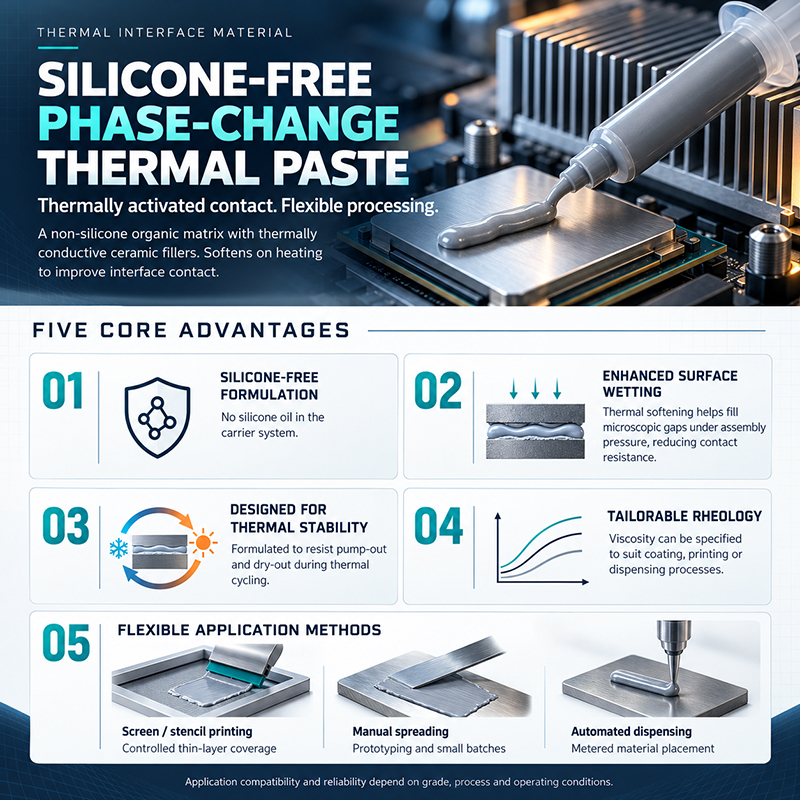
At its phase transition temperature of ≥45°C, LEN200 softens to conform to the mating surfaces. This behavior promotes surface wetting and helps fill microscopic gaps, reducing contact thermal resistance between the heat source and heat sink.


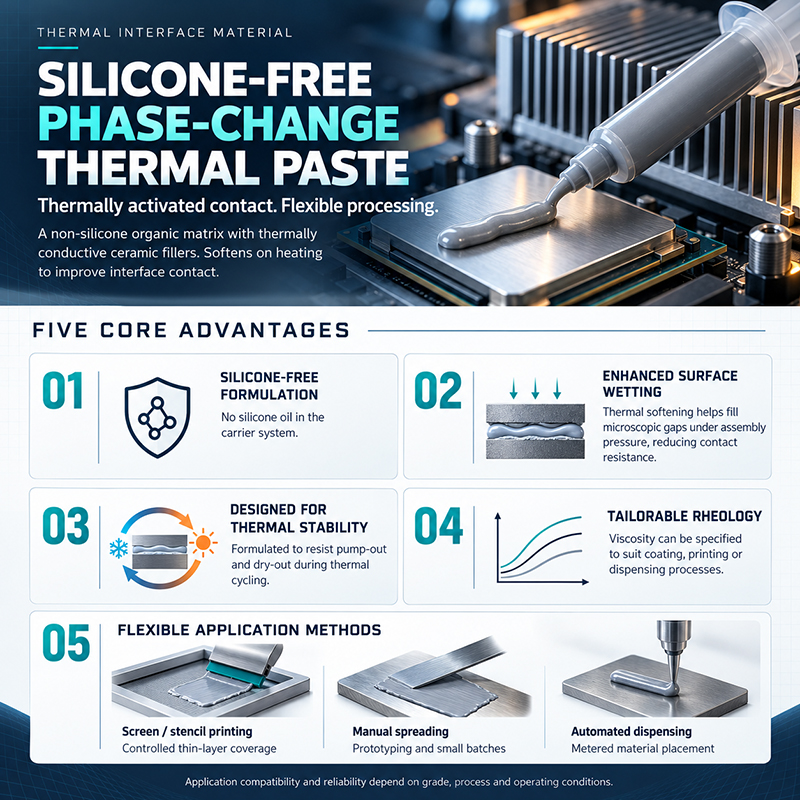
The non-silicone formulation avoids silicone oil leakage and associated contamination concerns. With adjustable viscosity options and support for multiple application methods, LEN200 fits a range of electronic assembly processes.

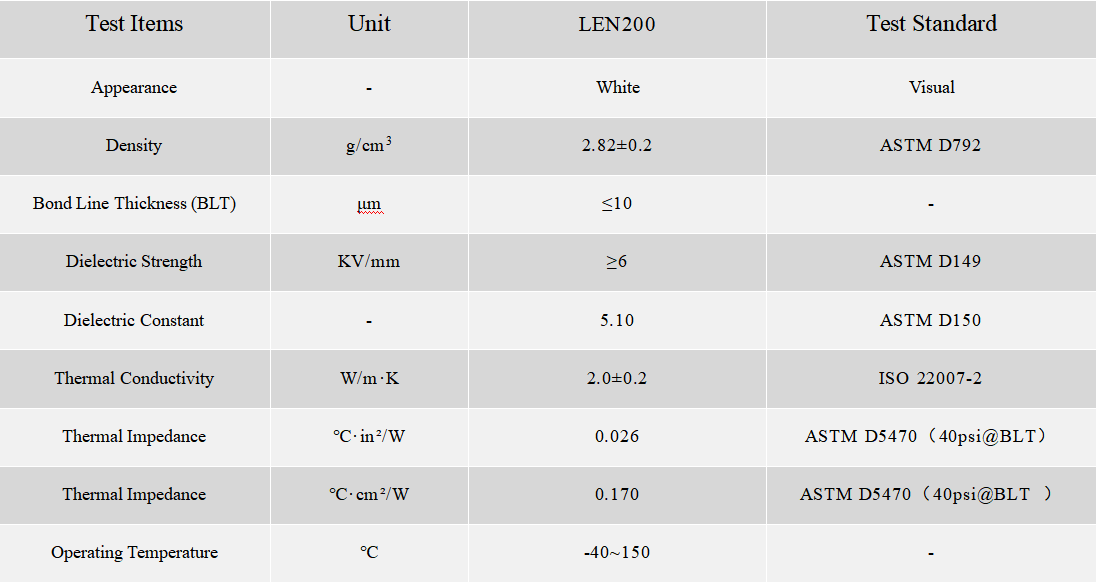
Test Items

Unit

LEN200

Test Standard

Appearance

-

White

Visual

Density

g/cm3

2.82±0.2

ASTM D792

Bond Line Thickness (BLT)

μm

≤10

-

Dielectric Strength

KV/mm

≥6

ASTM D149

Dielectric Constant

-

5.10

ASTM D150

Thermal Conductivity

W/m·K

2.0±0.2

ISO 22007-2

Thermal Impedance

℃·in²/W

0.026

ASTM D5470(40psi@BLT)

Thermal Impedance

℃·cm²/W

0.170

ASTM D5470(40psi@BLT )

Operating Temperature

℃

-40~150

-

Performance and Processing Advantages


2.0 ± 0.2 W/m·K thermal conductivity: Facilitates heat transfer through the interface material.


Phase change surface conformity: Helps accommodate microscopic surface irregularities as the material softens.


Thin bond line capability: Supports interface thicknesses of ≤10 μm in closely fitted assemblies.


0.026 °C·in²/W thermal impedance: Provides low resistance to heat flow across the thermal interface.


Silicone-free composition: Addresses silicone oil migration concerns in sensitive electronic assemblies.


Application flexibility: Supports screen printing, manual application, and automatic dispensing, with viscosity options to match processing requirements.


Thermal Management Applications


LEN200 phase change thermal interface material (TIM) is designed for use between heat-generating components and heat dissipation hardware across several application areas:


Computing and integrated electronics: Thermal interfaces connecting CPUs, GPUs, and ICs to heat sinks.
Power conversion and control: Heat transfer interfaces for power modules and power semiconductors.
Automotive electronics: Thermal management in battery management systems (BMS) and engine control units (ECUs).
Telecommunications equipment: Component-to-heat-sink interfaces in routers and base station equipment.

LED lighting: Thermal contact between LED assemblies and associated cooling structures.


Integration into Your Assembly Process


Apply LEN200 thermal paste using screen printing, manual spreading, or automated dispensing according to the interface geometry and production workflow. Adjustable viscosity options provide flexibility when selecting material delivery and deposition methods.


Contact us for LEN200 product details, viscosity options, and application guidance for your thermal management requirements.

Test Items

Unit

LEN200

Test Standard

Appearance

-

White

Visual

Density

g/cm3

2.82±0.2

ASTM D792

Bond Line Thickness (BLT)

μm

≤10

-

Dielectric Strength

KV/mm

≥6

ASTM D149

Dielectric Constant

-

5.10

ASTM D150

Thermal Conductivity

W/m·K

2.0±0.2

ISO 22007-2

Thermal Impedance

℃·in²/W

0.026

ASTM D5470(40psi@BLT)

Thermal Impedance

℃·cm²/W

0.170

ASTM D5470(40psi@BLT )

Operating Temperature

℃

-40~150

-
Typical Applications


-Thermal management between heat-generating electronic components such as integrated circuits (ICs), central processing units (CPUs), graphics processing units (GPUs), and LED lighting, and heat sinks
-Thermal management in power modules and power semiconductors
-Thermal applications in vehicle battery management systems (BMS) and engine control units (ECU)
-Thermal management in routers and base station equipment

Features and Advantages


-Non-silicone formulation, no silicone oil leakage
-Reliable stability
-Optimal surface wetting
-Adjustable viscosity for greater operational flexibility

Contact

Tel:+86-13691979380
+86-19065180554

E-mail:elvinlen@szutd.com
Carly@szutd.com

Address:8th Floor, Tower B, Lechuanghui Building, No. 1211 Guanguang Road, Longhua District, Shenzhen City, Guangdong Province