
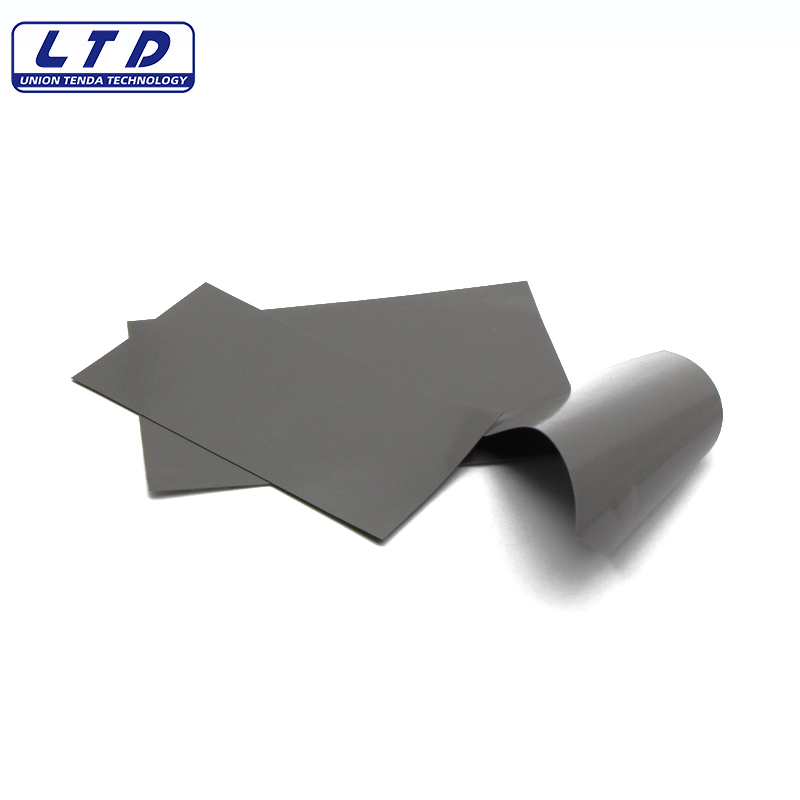
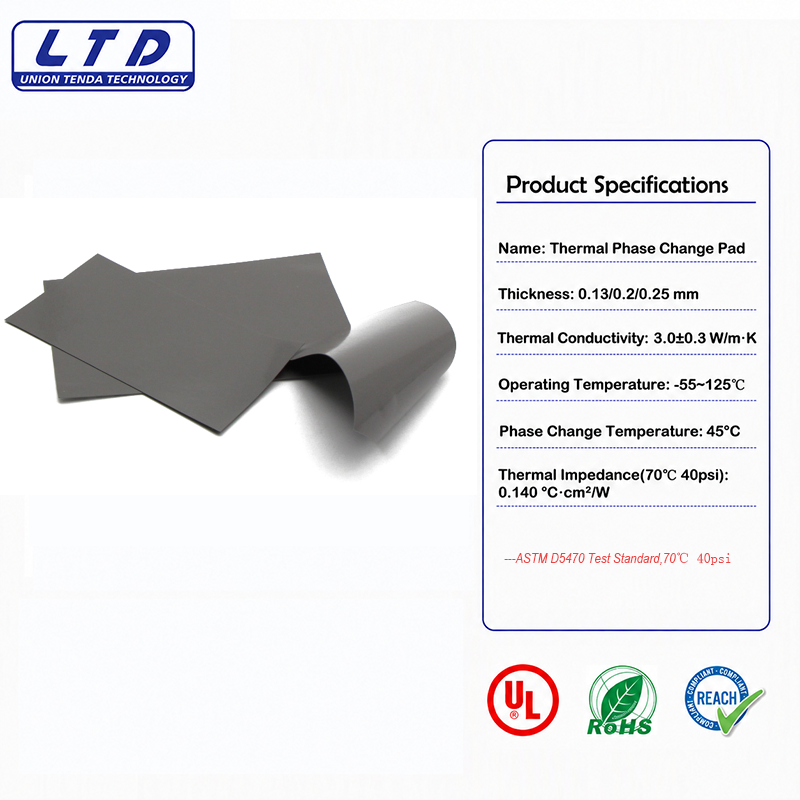
LCM300 is a phase change thermal pad designed to improve heat transfer between electronic components and heat sinks. With a thermal conductivity of 3.0 ± 0.3 W/m·K and a phase change temperature of 45°C, it combines convenient installation with low thermal resistance for demanding electronic cooling applications.
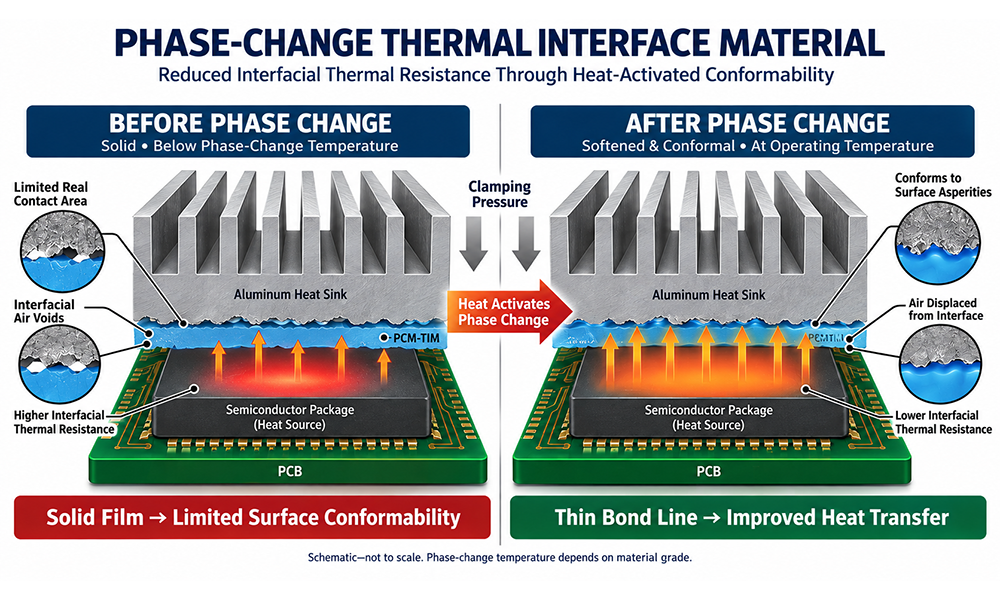
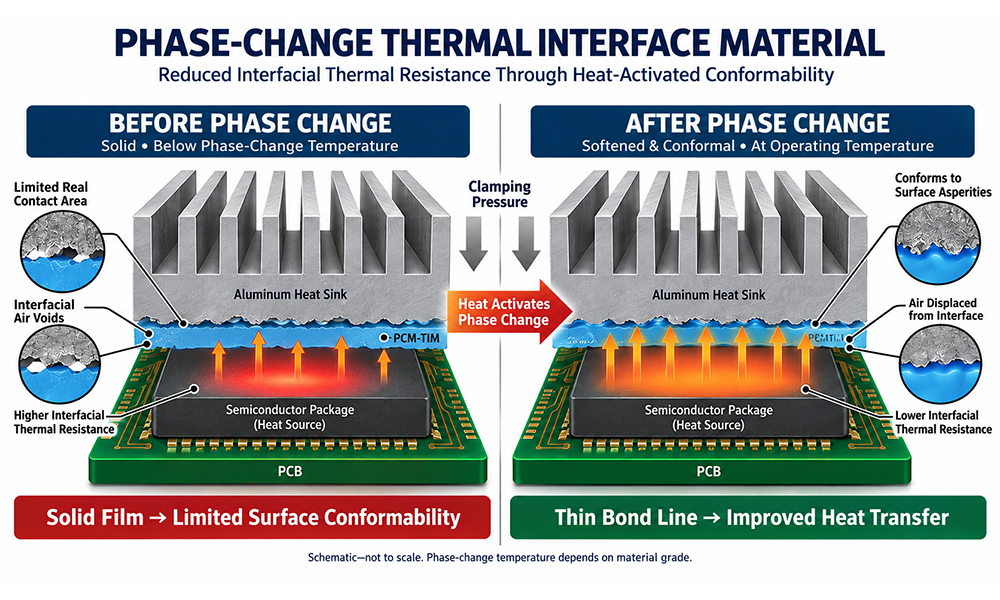
Solid at room temperature, this PCM thermal pad is easy to position during assembly. As it reaches its phase change temperature, the material softens and flows to wet the mating surfaces, filling microscopic surface irregularities and displacing trapped air. This helps reduce contact thermal resistance and improve heat transfer across the interface.
LCM300 is designed for long-service-life applications requiring stable thermal performance. It offers excellent surface wettability and filling performance without silicone oil bleeding.
|
Test Items |
Unit |
LCM300 |
Test Standard |
|
Appearance |
- |
Gray |
Visual |
|
Thickness |
mm |
0.13/0.2/0.25 |
ASTM D374/374M |
|
Phase change temperature |
℃ |
45 |
ISO 11357-3 |
|
Enthalpy of melting |
J/g |
10.8 |
ISO 11357-3 |
|
Density |
g/cm3 |
2.30±0.20 |
ASTM D792 |
|
Volume resistivity |
Ω·cm |
≥1×10¹⁴ |
ASTM D257 |
|
Thermal Conductivity |
W/m·K |
3.0±0.3 |
ISO 22007-2 |
|
Thermal Conductivity |
W/m·K |
3.0±0.3 |
ASTM D5470(Three thickness fitting) |
|
Thermal Impedance |
℃·in²/W |
0.022 |
ASTM D5470(70℃@40psi@BLT) |
|
Thermal Impedance |
℃·cm²/W |
0.140 |
ASTM D5470(70℃@40psi@BLT) |
|
Operating Temperature |
℃ |
-55~125 |
- |
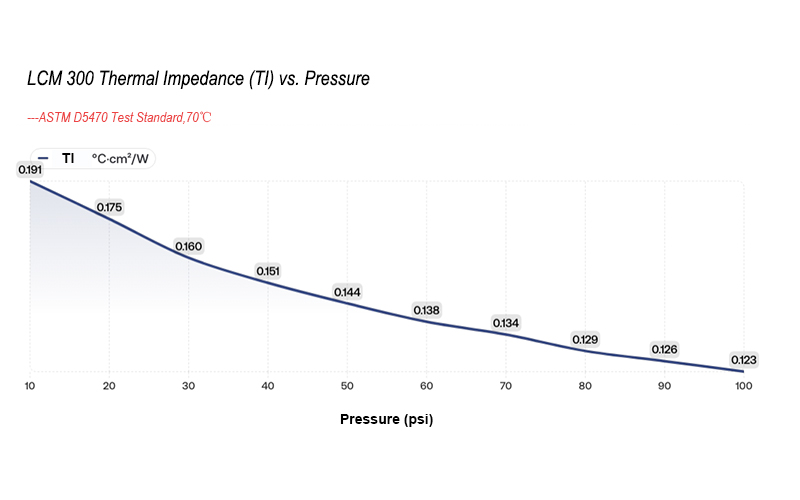
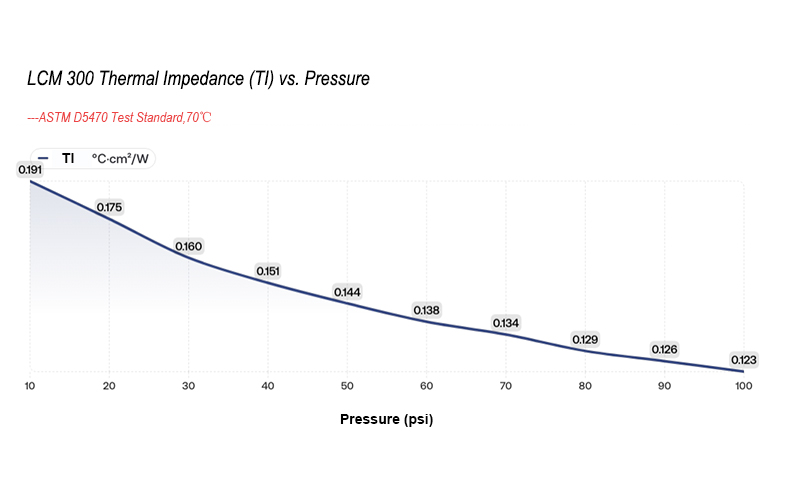
Low thermal impedance: A thermal impedance of 0.022°C·in²/W at 70°C and 40 psi supports efficient heat transfer between components and heat sinks.
Excellent surface wettability: Helps fill microscopic surface irregularities and reduce insulating air pockets.
Convenient installation: Solid at room temperature for easier handling and positioning.
Reliable thermal performance: Designed for applications requiring consistent performance over a long service life.
No silicone oil bleeding: Helps avoid contamination associated with silicone oil migration.
Multiple thickness options: Available in 0.13, 0.20 and 0.25 mm thicknesses.
Microscopic irregularities between a component and a heat sink can trap air and restrict heat transfer. LCM300 addresses this by changing from a solid installation form to a more conformable material at its 45°C phase transition temperature.
As the material softens and flows, it improves contact with both mating surfaces and fills microscopic voids. This wetting action reduces interfacial thermal resistance, helping heat move from the component into the heat sink.
This thermal phase change material is intended for mating thermal interfaces where surface contact and low thermal impedance are critical.
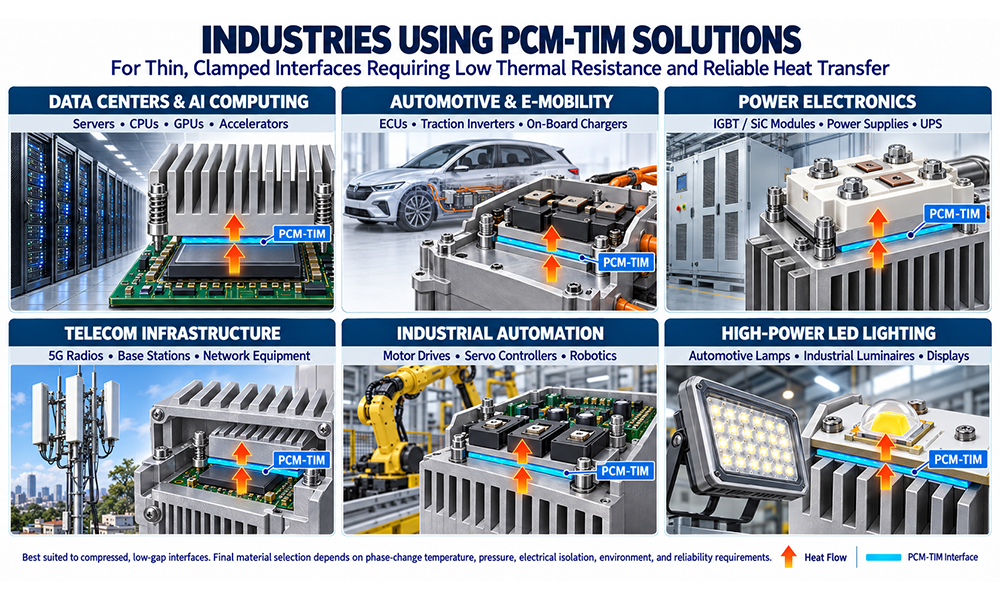
Provides a thermal interface between heat-generating integrated circuits, central processing units or graphics processing units and their heat sinks.
Supports heat transfer in power electronics requiring reliable thermal management.
Suitable for thermal interfaces in battery management systems (BMS), engine control units (ECU) and related electronic assemblies.
Supports thermal management in routers, base station equipment and other heat-generating communication devices.
Transfers heat between LED components and heat sinks to support thermal management.
A phase change thermal pad is a thermal interface material that is solid at room temperature and softens or flows when it reaches a specified transition temperature. This allows it to conform to mating surfaces, fill microscopic irregularities and reduce contact thermal resistance.
LCM300 has a phase change temperature of 45°C. At this temperature, the material begins to soften and flow, improving surface contact at the thermal interface.
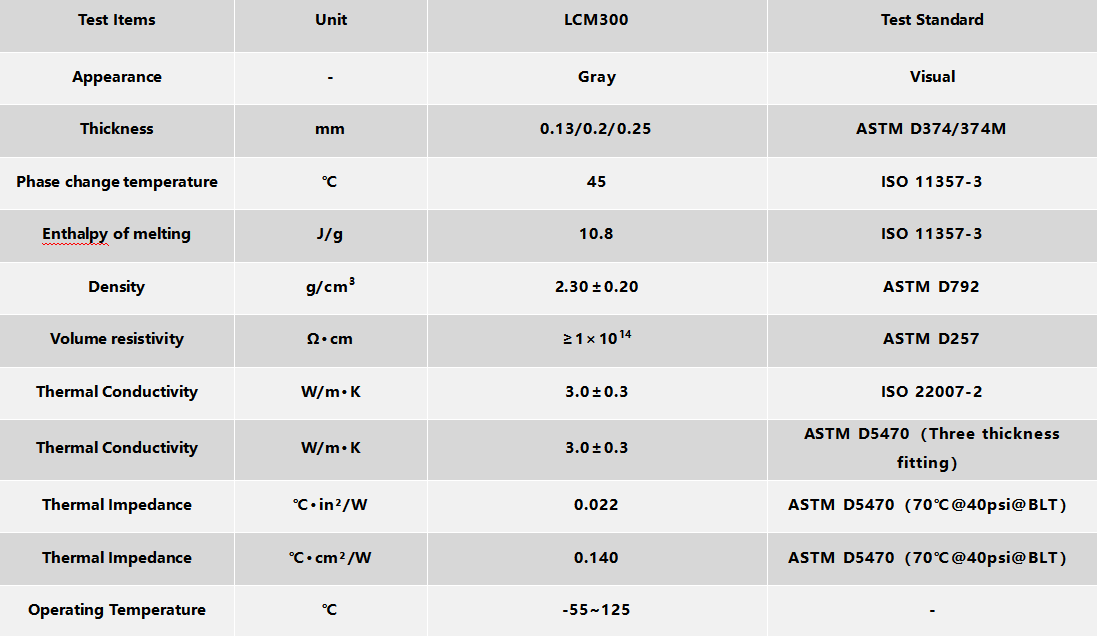
LCM300 has a thermal conductivity of 3.0 ± 0.3 W/m·K. Its specified thermal impedance is 0.022°C·in²/W, measured at 70°C and 40 psi.
The LCM300 phase change material thermal pad is available in 0.13 mm, 0.20 mm and 0.25 mm thicknesses. Select the thickness according to the assembly’s interface geometry and contact requirements.
LCM300 can be used between heat-generating electronic components and heat sinks in computing, power electronics, automotive electronics, telecommunications equipment and LED lighting.
Contact us for the LCM300 technical datasheet, sample availability and guidance on selecting a thickness for your thermal interface application.

|
Test Items |
Unit |
LCM300 |
Test Standard |
|
Appearance |
- |
Gray |
Visual |
|
Thickness |
mm |
0.13/0.2/0.25 |
ASTM D374/374M |
|
Phase change temperature |
℃ |
45 |
ISO 11357-3 |
|
Enthalpy of melting |
J/g |
10.8 |
ISO 11357-3 |
|
Density |
g/cm3 |
2.30±0.20 |
ASTM D792 |
|
Volume resistivity |
Ω·cm |
≥1×10¹⁴ |
ASTM D257 |
|
Thermal Conductivity |
W/m·K |
3.0±0.3 |
ISO 22007-2 |
|
Thermal Conductivity |
W/m·K |
3.0±0.3 |
ASTM D5470(Three thickness fitting) |
|
Thermal Impedance |
℃·in²/W |
0.022 |
ASTM D5470(70℃@40psi@BLT) |
|
Thermal Impedance |
℃·cm²/W |
0.140 |
ASTM D5470(70℃@40psi@BLT) |
|
Operating Temperature |
℃ |
-55~125 |
- |
Provides a thermal interface between heat-generating integrated circuits, central processing units or graphics processing units and their heat sinks.
Supports heat transfer in power electronics requiring reliable thermal management.
Suitable for thermal interfaces in battery management systems (BMS), engine control units (ECU) and related electronic assemblies.
Low thermal impedance: A thermal impedance of 0.022°C·in²/W at 70°C and 40 psi supports efficient heat transfer between components and heat sinks.
45°C phase transition: The material conforms to the contact surfaces as it reaches its transition temperature.
Excellent surface wettability: Helps fill microscopic surface irregularities and reduce insulating air pockets.
Convenient installation: Solid at room temperature for easier handling and positioning.
Reliable thermal performance: Designed for applications requiring consistent performance over a long service life.
No silicone oil bleeding: Helps avoid contamination associated with silicone oil migration.
Multiple thickness options: Available in 0.13, 0.20 and 0.25 mm thicknesses.

Tel:+86-13691979380
+86-19065180554
E-mail:elvinlen@szutd.com
Carly@szutd.com
Address:8th Floor, Tower B, Lechuanghui Building, No. 1211 Guanguang Road, Longhua District, Shenzhen City, Guangdong Province


 Send Request
 Whatsapp